The swap ID identifies the exchange workflow
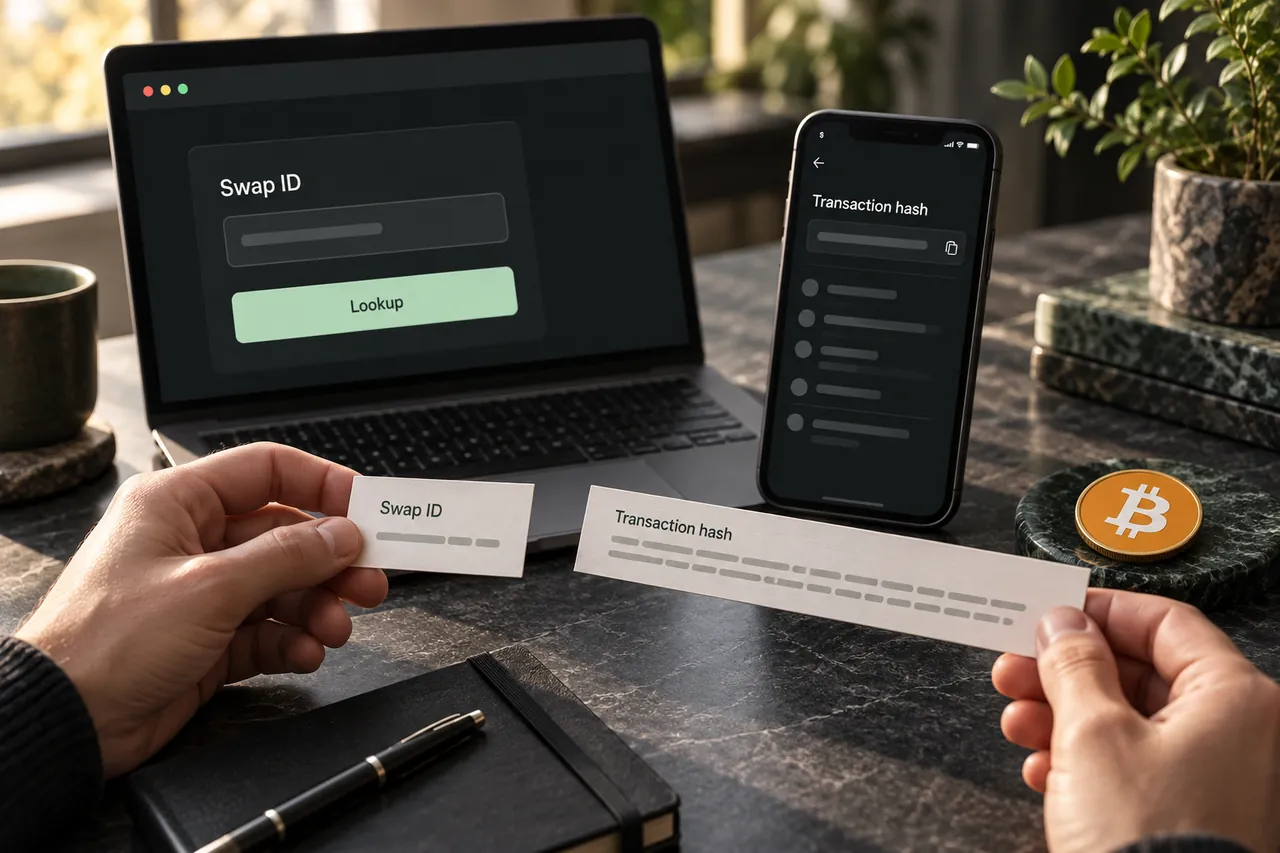
The swap ID belongs to the order used by the interface and provider workflow. It ties together selected assets, networks, amount, recipient and processing status. The page URL can contain that identifier so you can return to the same swap. A URL containing an ID is not itself evidence that the deposit has been made.
The status card displays the swap ID with a copy icon. Copy the actual value rather than retyping it from a screenshot. Save it privately with the confirmed instructions while the order is active. If you contact support, use that value to identify the order before describing the transaction details.
The sending transaction hash identifies the deposit movement
After your wallet broadcasts a transaction, its history normally provides a network transaction reference. That reference lets you inspect the transfer on the correct chain and compare the destination, asset, amount and status with the order. An exchange withdrawal may show an internal request reference before it supplies the actual on-chain transaction reference.
Do not confuse a wallet activity label or withdrawal ticket number with the blockchain hash. A request can exist before a transaction is broadcast. If the sending platform has not provided network evidence, check that platform’s withdrawal status instead of assuming the provider has already received funds.
The payout has its own evidence
A cross-network swap usually involves a separate receiving transfer after the deposit and provider processing. The payout reference, when available, belongs to the destination chain. It should not be expected to match the deposit hash. Even when source and destination use the same network, two transfers can still be separate transactions.
Use the payout reference to inspect what arrived at the recipient. If the recipient is a custodial account, the platform may apply its own confirmation or crediting rules. Provider payout status, on-chain transfer status and account credit are related but distinct pieces of evidence. Keep them aligned with their respective records.
| Reference | What it identifies | Useful question |
|---|---|---|
| Swap ID | Exchange order | What stage is this order in? |
| Deposit hash | Sending network transaction | What did the sender actually deliver? |
| Payout hash | Receiving network transaction | What did the provider send to the recipient? |
| Withdrawal request ID | Sending platform request | Has the exchange broadcast my withdrawal? |
A hypothetical BTC-to-USDC tracking example
Imagine an order has an illustrative ID ExampleSwap42. The user sends BTC and receives a Bitcoin transaction hash from the wallet. Later, the provider reports a USDC payout on Ethereum with a different Ethereum transaction hash. None of these example references is an address to pay or a live order identifier.
If the user asks why the swap still awaits a deposit, support needs ExampleSwap42 together with the Bitcoin sending reference and actual deposited amount. If the provider reports a payout but the exchange account has not credited USDC, the Ethereum payout reference becomes relevant. Sending only the wrong hash can direct an investigation to the wrong stage.
A hash does not validate every instruction
A transaction reference proves that a record can be inspected on a network; it does not prove the transfer matched the order. Check the asset and chain, full deposit destination, required amount and any memo. A confirmed transfer to a wrong address is not corrected by supplying its hash in the swap form.
Likewise, a swap ID does not reserve an offer indefinitely or guarantee a payout. Read the confirmed order conditions and current status. If the amount or deadline was not followed, preserve the evidence and contact support. Do not create another payment to the same address merely because the original transaction now has a hash.
Keep a compact private evidence note
Store one note per order with the swap ID at the top, followed by source and destination asset-network descriptions. Add the confirmed deposit amount, provider, recipient and deadline, then the sending reference after broadcasting. If a payout reference becomes available, attach it under the receiving side so the two do not get mixed together.
Avoid publicly posting complete order screenshots when a private support message will do. Transaction and order records can reveal financial activity or destination details. Never include a seed phrase, private key or wallet password in an evidence note intended for support. Those secrets are unnecessary for identifying an order or reading public transaction data.
Troubleshoot according to the missing record
If you have only an exchange withdrawal request, start with the exchange’s broadcast status. If you have a sending hash but the order has not recognized a deposit, compare its actual transfer with the deposit instructions. If the provider says payout sent, inspect the destination network and receiving service’s crediting process.
- Copy the swap ID from the order’s copy control.
- Save the exact source and destination network names.
- Add the actual sending hash after broadcast, not only a platform ticket.
- Add the payout reference separately when available.
- Share the minimum useful evidence through the support contact route.
A FEW MORE DETAILS
Common questions
Is the swap ID a wallet address?
No. It identifies the order and helps you return to its status. Send funds only to the provider deposit address shown in the confirmed instructions.
Can I use the deposit hash to find the order?
Support may use it as evidence, but the swap ID is the direct order reference. Save both so the transaction can be matched to its intended exchange.
Why are the deposit and payout hashes different?
They represent separate transfers, often on different networks. A cross-network swap has distinct sending and receiving transaction records.
Should I share my swap link publicly?
Keep order details private where possible. Use the support contact route and share only the information necessary to investigate, without wallet secrets or unrelated personal data.
Prepared by Tornado Swap to explain the swap workflow. Network conditions and provider offers can change; check the current order instructions before sending funds.