A catalog selection and a live offer answer different questions
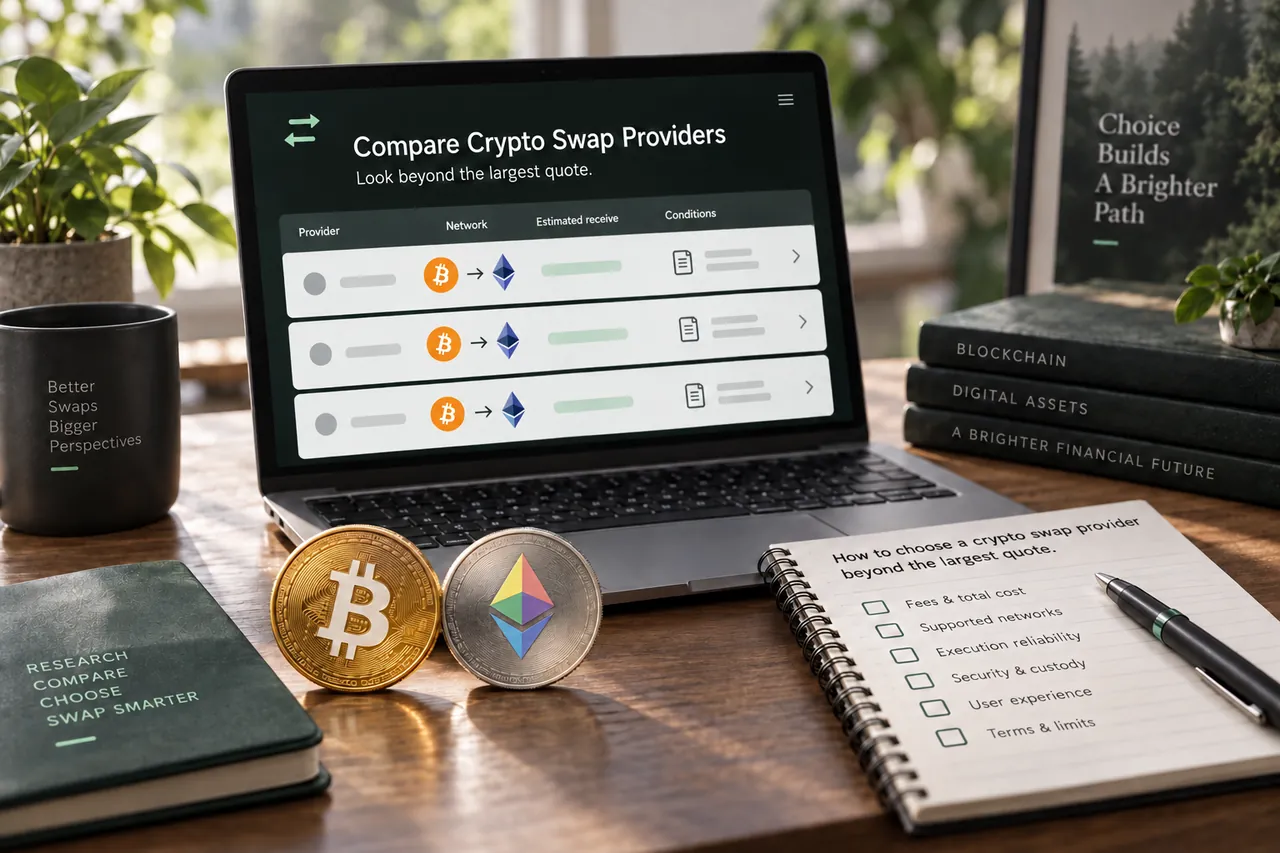
The coin list identifies asset and network selections available in the interface. A pair page describes a possible route between them. A live provider quote evaluates your chosen amount and current conditions. These stages should not be confused: seeing both coins in the picker does not guarantee an executable offer for your exact deposit.
A provider may restrict an amount because of its own limits, available liquidity or temporary operation. The interface can therefore show no suitable route even for well-known assets. Do not deposit to an old address while waiting for an offer. First obtain a current quote and then create an order with matching instructions.
Minimum and maximum values are not universal coin properties
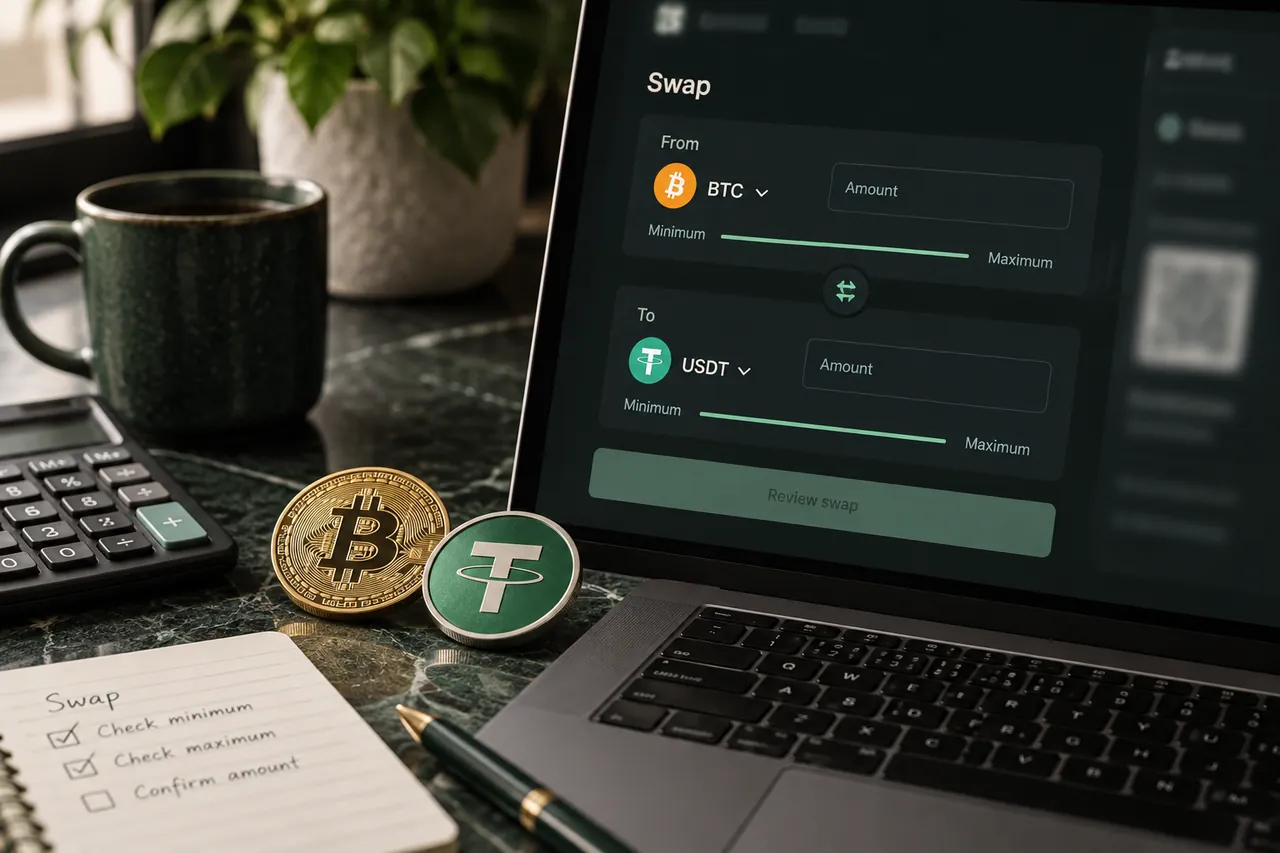
A minimum is an acceptance condition for a particular operation, not a permanent technical property of the ticker. A route involving a network with a different payout cost can have different economics. Providers can also change their ranges. Treat any cached or introductory limit as orientation and confirm the amount-specific live result before ordering.
The maximum is likewise not a promise of immediate liquidity for every deposit below it. A provider can be unavailable or quote a narrower amount for a particular pair. If you change a network, rate mode or provider, check the conditions again. Do not assume an offer for one asset version applies to another version under the same ticker.
Use the net delivered deposit
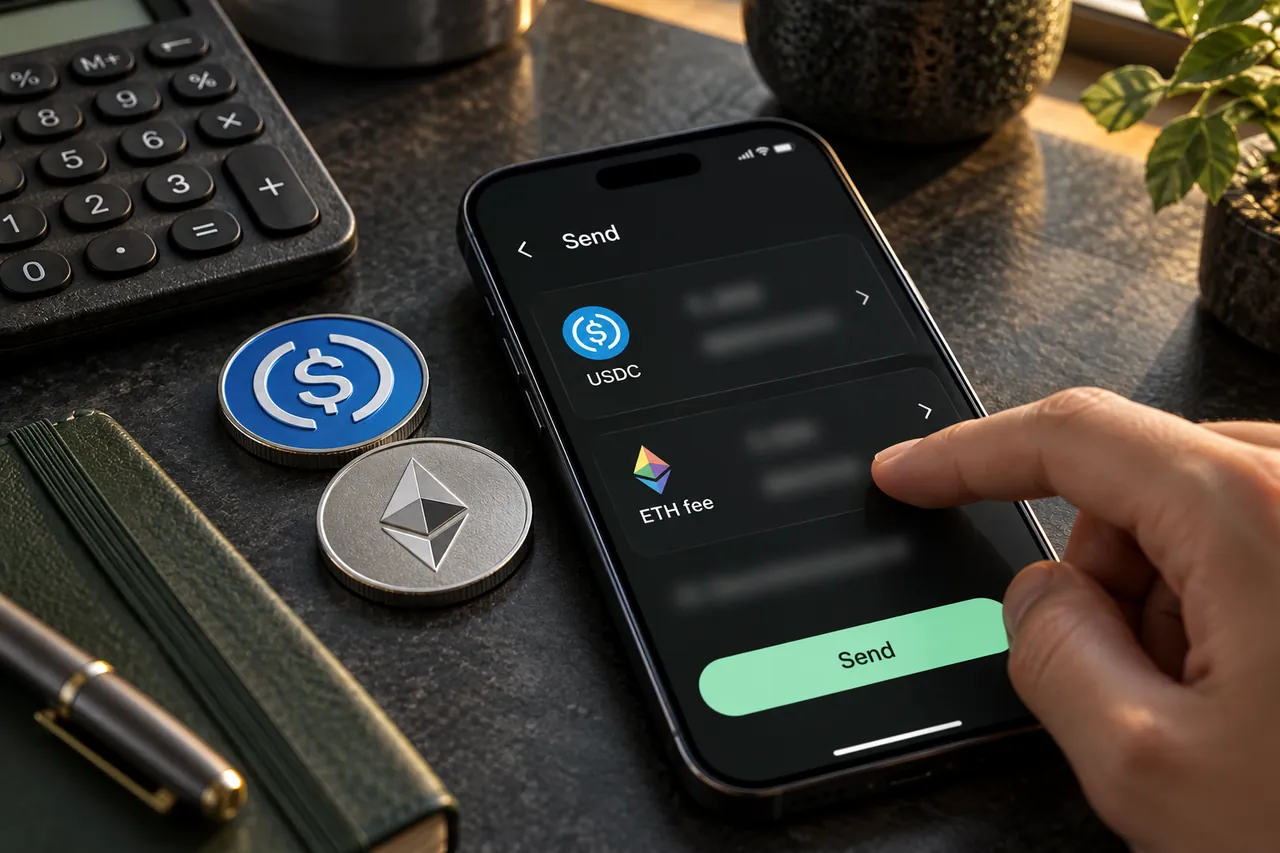
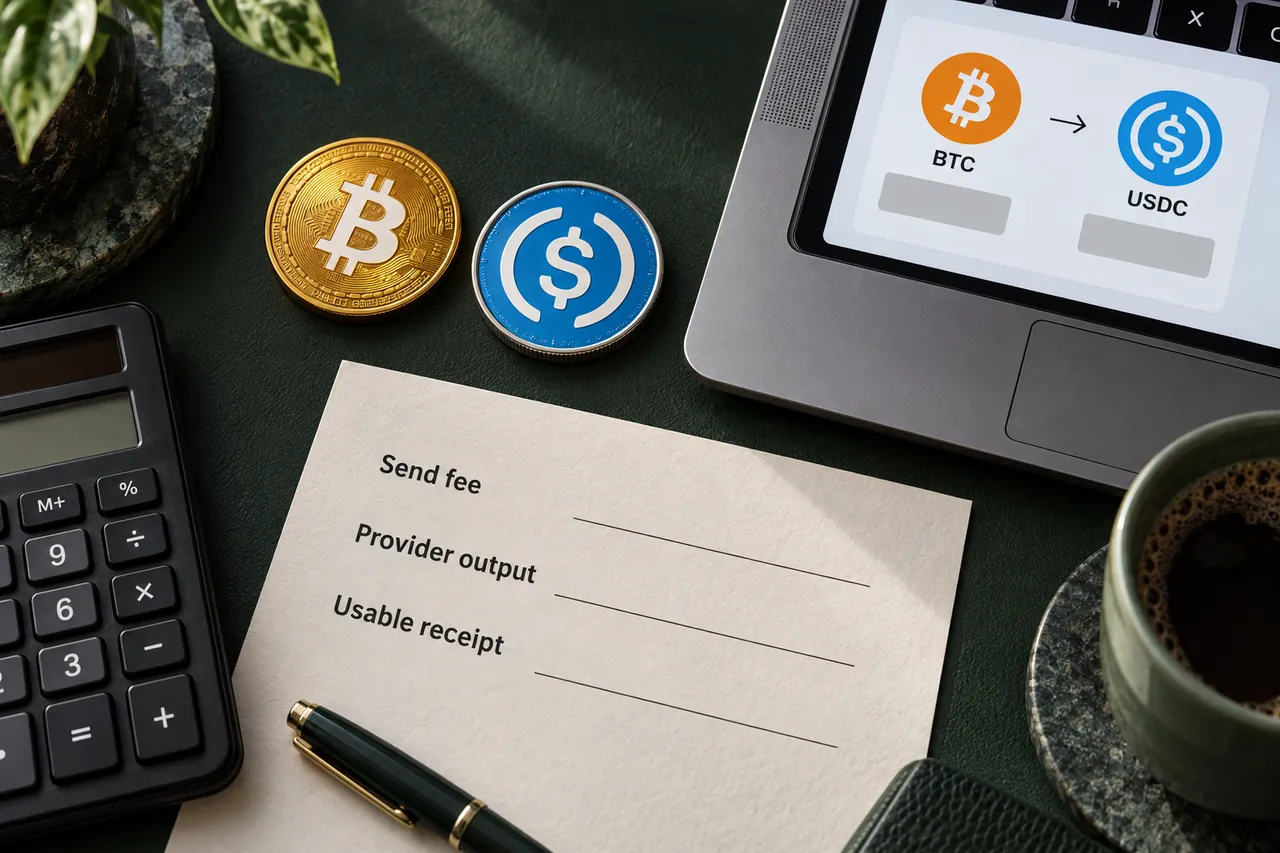
The amount that counts toward the order is what actually reaches the provider under its instructions. A sending exchange can deduct a withdrawal fee from the number you type. A self-custody wallet can require a separate fee balance or reduce a max-send amount. Review that preview before choosing the requested swap amount.
An intended deposit just above a displayed minimum can become an underpayment after a deduction. The remedy is to reconcile the withdrawal with the order before confirmation, not to rely on the provider overlooking the difference. If you cannot deliver the required amount, request a fresh supported offer or stop before sending.
The destination can impose another minimum
The receiving wallet or exchange has its own rules. A provider offer may be valid while the expected payout is below the recipient service’s minimum credit. Check the receiving asset, network and minimum before choosing a deposit amount. A successful on-chain payout does not automatically override another platform’s account-crediting policy.
A self-custody destination can have wallet-specific setup or onward-transfer needs instead. Look at the actual receive screen and planned use. Do not treat a low provider minimum as proof that the resulting balance will be immediately useful everywhere. The complete route must work at the sender, provider and destination.
| Constraint | Which amount to check |
|---|---|
| Sending platform minimum | Withdrawal you can request |
| Provider minimum or maximum | Actual amount delivered to the order |
| Destination credit minimum | Expected payout arriving at recipient |
| Later withdrawal minimum | Balance you plan to move after receiving |
A hypothetical near-minimum deposit
Imagine a provider currently accepts a hypothetical minimum of 100 units for a selected route. A sending exchange deducts an illustrative 2-unit withdrawal fee. Entering 101 units at that exchange would deliver 99 and fall below the provider condition. The numbers demonstrate the issue rather than describing a current token limit.
Before creating an order, the user checks the preview and chooses a supported withdrawal that delivers the required deposit. The user also checks that the quoted output meets the receiving platform’s minimum. If any condition cannot be met, the route is not suitable for that planned amount, even though both tokens appear in the catalog.
Do not split a payment to bypass an order limit
A provider order can expect a single deposit amount within its own window. Sending several arbitrary fragments or splitting a larger intended exchange across old addresses is not a reliable way to satisfy it. Partial payments can be treated differently or require support, and limits or provider policies should not be bypassed.
If you want to make a small operational test, obtain a separate valid quote and order for that supported test amount. Follow its instructions in full and evaluate the outcome before deciding on another independent transaction. Do not use an underpayment as a test of a larger order’s address.
A FEW MORE DETAILS
Common questions
Why is a coin listed if my amount has no route?
The catalog selection does not guarantee liquidity at every size. The current provider quote checks your exact amount, rate preferences and network combination.
Are the homepage limits permanent?
No. Limits can vary by provider, route and current conditions. Confirm the live amount-specific offer before creating an order.
Can I send slightly less than the minimum?
Follow the confirmed instructions. An insufficient payment can fall outside the accepted order conditions and require a provider-specific resolution rather than normal processing.
Can I split a large payment into smaller deposits?
Do not split an existing order unless its provider explicitly instructs it. Use only valid independently quoted orders and comply with provider limits and policies.
Prepared by Tornado Swap to explain the swap workflow. Network conditions and provider offers can change; check the current order instructions before sending funds.