Define the route before comparing providers
Write the sending and receiving sides with both asset and network names. Then enter the actual deposit that your wallet or exchange can deliver. This gives every provider a comparable request. Comparing ETH on one L2 with ETH on mainnet, or gross withdrawal with net deposit, can produce an attractive number for a different problem.
Check the destination’s own deposit support and minimum before searching. A provider cannot make another platform credit an unsupported token version. If a receiving exchange accepts only one network, exclude alternatives that do not deliver that version. Operational compatibility belongs at the start of comparison, not after the order is funded.
Compare output and cost on the same basis
Use the current route search for the same input amount and rate preference. Inspect the receive amount for each provider, then identify the separate sending-wallet or exchange fee. Provider quotes can already reflect their own costs. Do not subtract a guessed provider charge again if it is already represented in the output.
Include the practicality of the result. A payout on a compatible network with enough value to meet the destination’s minimum is useful; a numerically larger incompatible payout is not. If you plan an onward transfer, check the destination wallet’s fee asset and service rules separately so that the chosen output supports the next activity.
Read the rate conditions, not just the label
A fixed or floating label describes a rate arrangement under the selected provider’s conditions. Review what the provider expects for deposit amount and timing, and what it says about mismatches. A fixed offer should not be treated as a promise to honor the same output after a late or incorrectly sized deposit.
An offer’s quote window is also different from the deposit deadline of a created order. Prepare the wallet and recipient before confirmation, refresh stale offers and inspect the actual order instructions afterward. If you cannot meet the conditions, leave the funds in the sending wallet while you reassess the route.
Understand fixed versus floating conditionsTreat privacy ratings as comparison signals
A provider privacy or KYC rating can help organize offers, but it is not an assurance that verification will never occur. Read the selected provider policies and consider whether you are willing to use that process. No-account access to the interface does not override a provider’s requirements or applicable restrictions.
Evaluate information handling as part of the actual workflow. The provider receives order details and temporarily handles the deposit during processing. The sending and receiving services also hold their own records. Avoid assuming that selecting a privacy-oriented asset or a highly rated offer erases those relationships.
| Comparison factor | Useful question |
|---|---|
| Network fit | Does the destination accept this exact output version? |
| Amount fit | Can my sender deliver the requested deposit? |
| Rate conditions | What timing and amount rules apply? |
| Provider policy | What verification and refund processes can apply? |
| Evidence and support | Can I retain the order and transaction records? |
A hypothetical two-provider decision
Suppose two current offers for an illustrative 500 USDT deposit show 497 and 496 units of the same desired stablecoin on the same chain. The larger output is a useful price advantage only after both providers’ conditions are acceptable. The user checks limits, payment window, policies and destination compatibility before deciding.
If one provider requires a deposit process the sending exchange cannot complete in time, its extra unit is not a usable saving for this transaction. The user either selects an eligible alternative or changes the preparation and requests fresh offers. The example demonstrates decision structure rather than recommending a provider or describing current rates.
Know where responsibility sits after selection
Tornado Swap supplies the comparison and order interface; it does not itself custody the deposit. The chosen provider receives the payment and executes its processing and payout workflow. That relationship matters when assessing counterparty exposure, support and the handling of underpayments, late deposits or refund requests.
Save the provider name and confirmed terms with the swap ID. After broadcasting, add the sending hash and actual amount. If a payout is reported, retain its destination-network reference where available. Clear evidence helps distinguish a sender problem, deposit mismatch, provider processing stage or receiving-platform crediting question.
Use a repeatable selection checklist
A provider that worked previously still needs to be evaluated for the current route and amount. Availability, pricing and operational conditions can change. Reusing an old deposit address or relying on last week’s output bypasses the live checks that make a comparison meaningful. Each new order should have current instructions.
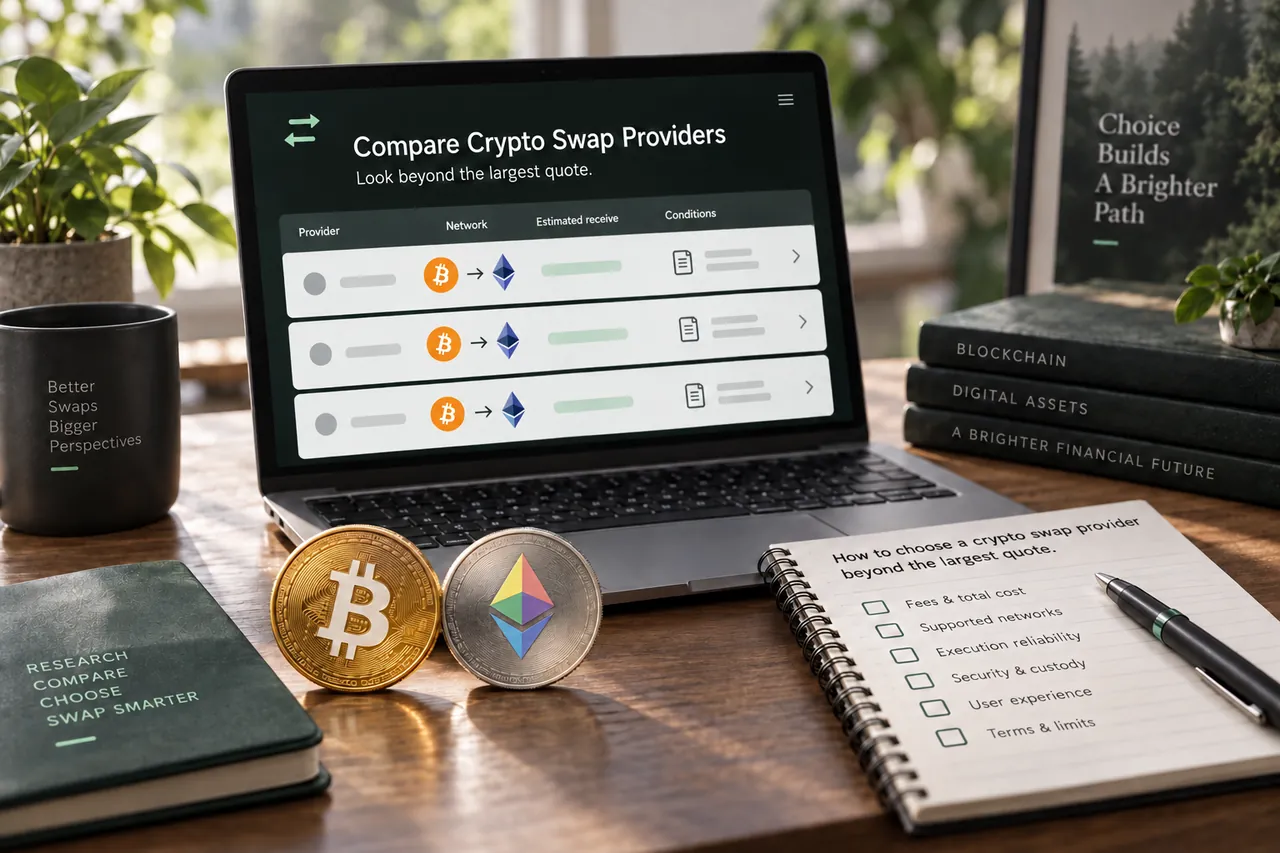
- Set the exact asset and network on each side.
- Use the deliverable deposit and a compatible destination.
- Compare current output and separately charged sending costs.
- Read rate, timing, verification and refund conditions.
- Confirm only an offer you can follow and save its order evidence.
A FEW MORE DETAILS
Common questions
Should I always select the top-ranked output?
Compare it first, but verify the network, limits and provider conditions. A price advantage is useful only when the offer fits the actual transaction.
Does a privacy rating guarantee no verification?
No. It is a comparison signal. The selected provider applies its own policies, which can include verification or additional checks.
Can I rely on the provider I used last time?
Past experience is relevant, but check a fresh quote and current conditions for the new amount and networks. Use new confirmed deposit instructions for each order.
Who handles a deposit after I confirm?
The selected provider receives and processes the exchange funds. Tornado Swap presents the interface and status; keep the provider identity and order evidence for support.
Prepared by Tornado Swap to explain the swap workflow. Network conditions and provider offers can change; check the current order instructions before sending funds.