A token and the network fee asset do different jobs
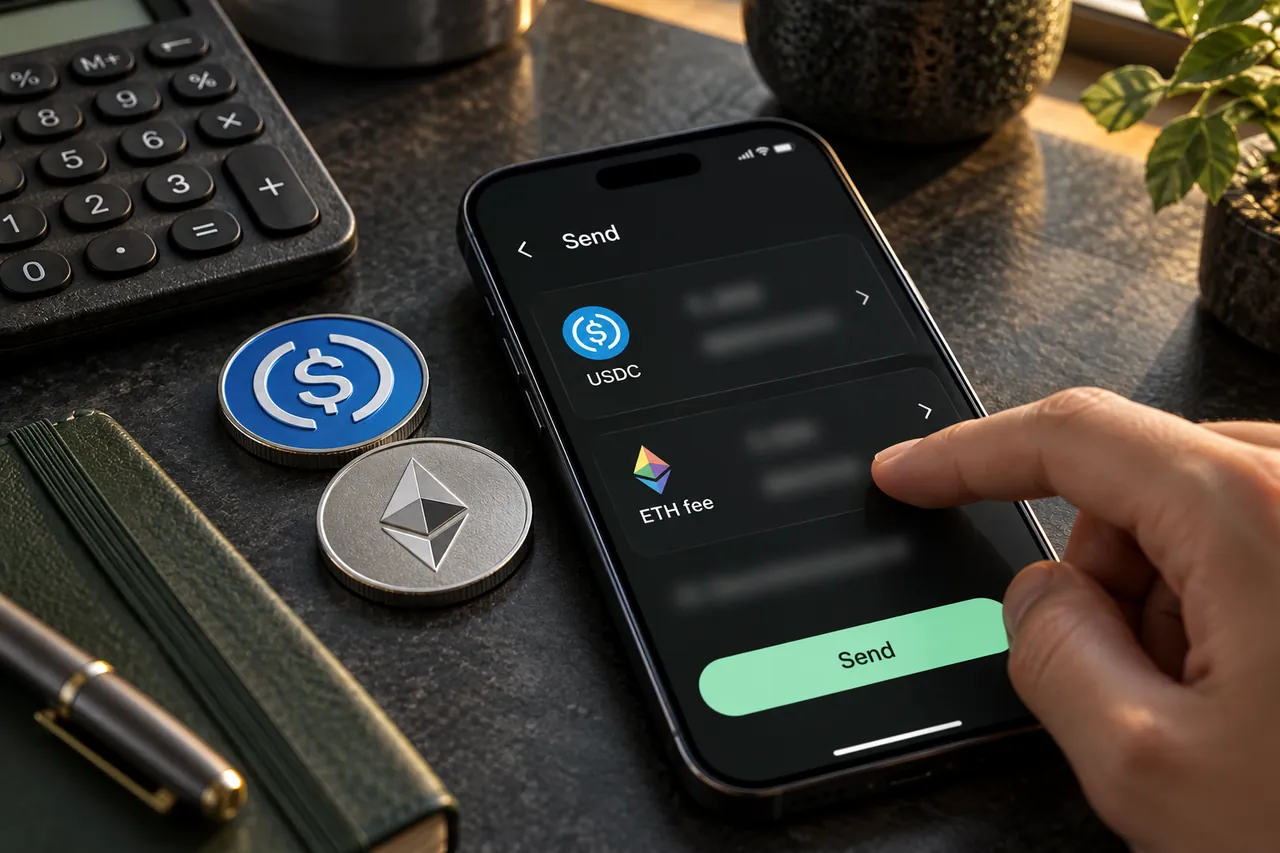
The asset being swapped is not always the asset used to pay for its transfer. On Ethereum, for example, a USDC balance is separate from ETH used for gas. On Solana, network fees are paid in SOL. Those examples explain why owning the token alone may not let a self-custody wallet complete an outgoing deposit.
The wallet’s current transaction preview is more useful than an old fee table. It accounts for the proposed operation and current wallet context. Do not assume all transfers on a chain have the same cost, and do not use another network’s fee asset simply because the wallet uses a familiar address format on both.
Check USDT on TRON and EthereumWhen the asset being swapped also pays the fee
Swapping a native fee asset introduces a different budgeting problem. If you send ETH from Ethereum or SOL from Solana, the displayed balance must support both the deposit and the network fee. A max-send button can reduce the delivered amount, which may conflict with an order expecting a specific deposit.
Set a deliverable order amount only after reviewing the wallet estimate. Leave a sensible operational margin for changes shown by the wallet rather than selecting an arbitrary universal reserve. A larger balance does not guarantee the transaction will succeed if another constraint, such as spendable funds or withdrawal support, prevents it.
Custodial withdrawals use a separate fee model
If an exchange sends the deposit for you, its withdrawal preview governs the net amount delivered. You may not need to hold a separate fee token inside that exchange account, but its own fee and minimum still matter. The platform might deduct a charge from the amount entered or show a separate total debit.
Check the final preview before confirming. A swap order expecting 100 units does not automatically adapt if a withdrawal fee leaves 98 arriving. The correct preparation is to reconcile the requested deposit with the platform’s net delivery, then create an offer for a supported amount you can actually send.
A hypothetical wallet with tokens but no fee balance
Imagine a wallet contains 400 USDC on Ethereum and no ETH. The user wants to deposit 300 USDC into a supported swap. The token balance exceeds the deposit, but the wallet cannot assume USDC pays the Ethereum network fee. It must obtain the required fee capacity through a method the wallet actually supports before the transfer can proceed.
The user checks the wallet preview before creating a time-limited order, resolves the fee requirement, then requests a fresh offer for 300 USDC. These balances are illustrative. The important sequence is preparing the ability to send before starting the provider’s deposit window, rather than discovering a missing fee asset while a deadline is running.
The receiving side may need a reserve later
A provider can send a payout that the wallet displays successfully, while a later outgoing transfer from that wallet still needs its own fee asset. Receiving USDC on Ethereum and sending it afterward are distinct operations. Do not mistake an inability to make that later transfer for proof that the swap payout failed.
On token networks, account setup or token-account arrangements can also affect the transaction preview. The exact payer and cost depend on the wallet and transfer, so avoid blanket rules that every recipient must already hold a fixed amount. Check the wallet’s actual receive and send requirements for the chosen asset and network.
| Scenario | What to check |
|---|---|
| Token deposit from self-custody | Token amount plus required fee asset or resources |
| Native-asset deposit | Spendable amount remaining after fee |
| Exchange-funded deposit | Net withdrawal amount and service charge |
| Later payout transfer | Destination network fee and wallet requirements |
Avoid solving a fee problem with the wrong network
A withdrawal platform might offer a cheaper network than the confirmed order expects. Selecting that alternative does not fund the original deposit correctly. A matching ticker is insufficient: the provider address and asset instructions belong to the selected network. If you want a different sending network, request a compatible new route before depositing.
Similarly, a fee asset on one chain does not automatically cover another chain’s transaction. ETH on Base is separate from ETH on Ethereum mainnet. Inspect the wallet’s active network, the token balance and the fee estimate together. Resolve mismatches in preparation rather than trying a transfer and hoping the provider recognizes it.
Match the exact sending networkCheck fees again at the final wallet confirmation
The provider order and wallet confirmation answer different questions. The order states where and how much to deposit; the wallet preview states what your transaction will do and cost. Compare them immediately before authorization, including complete address, amount, network and any memo. Scanning the order QR supplies only its address.
- Identify the actual sending network and fee asset.
- Preview the transfer before choosing the final deposit amount.
- If using an exchange, use its net delivered amount.
- Prepare any required fee reserve before starting the deposit window.
- Check the receiving wallet’s later-transfer requirements separately.
A FEW MORE DETAILS
Common questions
Can USDT always pay its own network fee?
Do not assume so. The wallet and network determine the fee mechanism. Inspect the current transfer preview and required resources or fee asset for the exact USDT version.
How much gas should I keep?
Use the wallet’s current estimate for the planned transaction and any later activity. A fixed reserve copied from an old guide may be insufficient or unnecessarily large.
Why did the payout arrive if I have no gas?
Receiving and sending are separate operations. A provider can deliver tokens while your wallet still needs the network’s fee asset to move those tokens later.
Can I change networks in the withdrawal screen to reduce the fee?
Only if you create and follow an order for that exact supported sending network. Changing the withdrawal network while keeping the original deposit instructions can send the wrong asset version.
Prepared by Tornado Swap to explain the swap workflow. Network conditions and provider offers can change; check the current order instructions before sending funds.