The wallet address and token account are different roles
A Solana token account holds units of one mint for an owner. An associated token account is a conventional, deterministically derived account for a particular wallet, mint and token program. These concepts explain why a wallet can show one user-facing address while tokens have their own account records.
For routine deposits, follow the destination's requested wallet address and supported transfer method rather than manually substituting an account you found in an explorer. A service may expect a particular form. The existence of another account in a transaction is not by itself proof the payout was sent to a stranger; inspect the ownership and transfer context.
Transaction fees and account storage are separate
Solana transactions pay SOL-denominated fees. Creating a token account also requires funding its minimum storage balance. That balance is not simply another provider conversion fee, and it should not be described as a recurring charge deducted from every token payment.
A first transfer to a wallet for a particular token can therefore differ from a later transfer using an existing compatible account. The wallet or sending application builds the actual instructions. Compare its explanation and estimated totals rather than assuming all USDC, USDT and PYUSD transfers have an identical fee regardless of account state.
How to choose the receiving networkThe recipient does not always pay account creation
The instruction that creates a token account names a payer. That payer can differ from the token owner and from the transaction's fee payer. A sending service can therefore create an account for a recipient instead of requiring the recipient to pre-fund it directly.
This prevents two common overstatements: that every recipient must always deposit SOL before receiving any token, and that recipients never have to consider SOL. Incoming payment handling depends on the sender's transaction. Later ordinary outgoing activity from a self-custody wallet generally needs a fee-paying arrangement of its own. Check the actual action rather than a universal rule.
Token programs and extensions can change requirements
Different token programs and enabled extensions can change account size or transaction behavior. Some token extensions support transfer-fee logic, while many token transfers do not use such fees. A general explanation of extensions is not evidence that every listed stablecoin has a token-level deduction.
Read the wallet's specific transaction details and the token's verified identity. If a quoted deposit amount must arrive exactly, investigate any proposed deduction before sending. Do not infer the behavior of one token from another with a similar logo or dollar reference. The selected provider must support the actual transfer form and net payment it receives.
Worked example: first versus repeat stablecoin payment
Imagine two hypothetical USDC transfers from the same wallet to two different recipients. One recipient already has a suitable account for that token; the other requires one to be created by the sending application. The transaction screens can show different SOL totals even though the token amounts match.
The sender checks whether the difference is a network fee, account-creation balance or another stated charge. They do not label the whole difference a provider spread. Before funding a swap, they ensure the actual token amount reaching the provider matches its instructions and retain enough SOL for the transaction as built. No fixed SOL number is assumed in this example.
Read a wallet estimate before a timed order
A wallet may estimate the transfer only after the recipient and token are selected. That is a good reason to check funding capability before creating an order with a deposit deadline. If a source exchange handles the send, its withdrawal fee and minimum can differ from the underlying chain costs.
Do not import a fixed rent or fee figure from an old screenshot into your payment plan. Account requirements and transaction structure matter. A wallet's estimate for a simple transfer also may not describe a later application interaction with more instructions. Review the action you are actually about to sign, including any account creation it adds.
Review the difference between rate typesClosing an account is not a routine troubleshooting step
An empty token account can sometimes be closed under the token program's rules, returning its lamports to a specified destination. That is different from reversing an already confirmed token transfer. Do not close accounts merely because a swap tracker is delayed or a wallet is displaying an unexpected balance.
Account-closing tools can request authority and should be reviewed carefully. Keep them separate from a provider deposit workflow. If an account still holds tokens or the wallet reports another restriction, do not attempt improvised operations to force a return. Ask the wallet or relevant service about the account state without sharing a seed phrase or private key.
A useful breakdown to save with the transaction
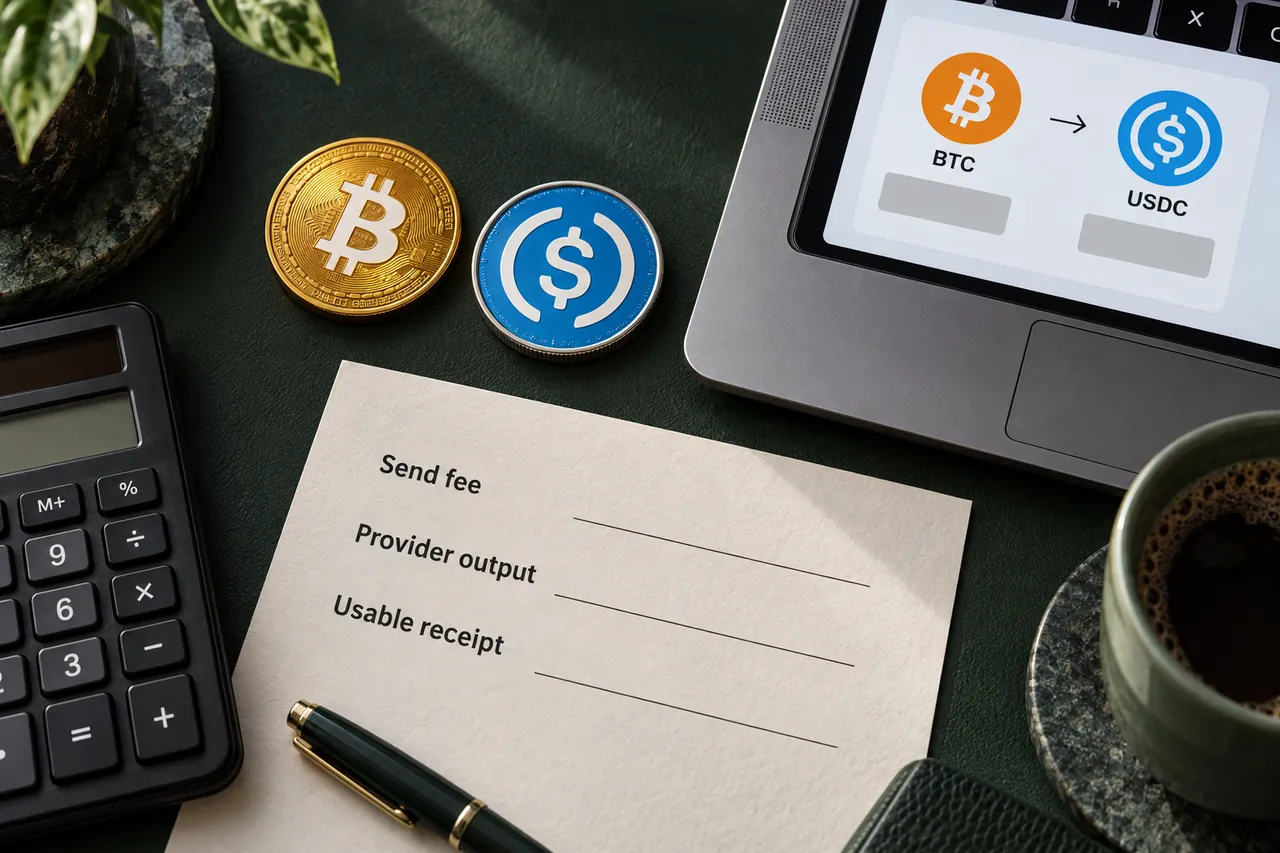
The table gives a simple way to record costs without conflating them. Your provider quote describes its estimated payout, while the sending wallet shows the transaction it constructs. Keep both records when comparing the complete route or asking support about a short deposit.
After sending, save the actual transaction signature and swap ID. If the provider awaits payment, compare the delivered token, mint, destination and amount rather than only the wallet's total SOL change. That total can include legitimate account funding and still tell you little about how many stablecoin units the provider received.
| Item | What to inspect |
|---|---|
| Transaction fee | SOL charge for the submitted transaction |
| Account creation | Whether a new token account is needed and who pays |
| Token-level deduction | Only if the specific token and transfer apply it |
| Provider conversion | The route's estimated output and conditions |
A FEW MORE DETAILS
Common questions
Does every Solana token transfer create an account?
No. A compatible token account may already exist. The actual transaction instructions determine whether creation is needed.
Must the recipient always pay token-account creation?
No. The creation instruction has a payer that can be different from the account's owner. A sender or application can fund it.
Is the storage balance the same as a network fee?
No. Account storage funding and transaction fees are different items, even when the wallet summarizes them together.
Do all Solana stablecoins charge transfer fees?
No. Some token extensions support them, but their existence does not mean every token or listed stablecoin uses that feature. Check the actual token and transaction.
Prepared by Tornado Swap to explain the swap workflow. Network conditions and provider offers can change; check the current order instructions before sending funds.