Define the receiving use before comparing networks
A payment, an exchange deposit and a self-custody holding can each have different network requirements. If a recipient supplies a PYUSD deposit address with a specific chain, that instruction is the starting point. Do not substitute another network because the token has the same name or a lower estimated fee.
The current curated options here are Ethereum and Solana. Other issuer deployments, if present elsewhere, are not evidence of a supported Tornado Swap route. A token appears in the selector so you can request a current quote; the exact amount, provider and availability still determine whether the order can be created.
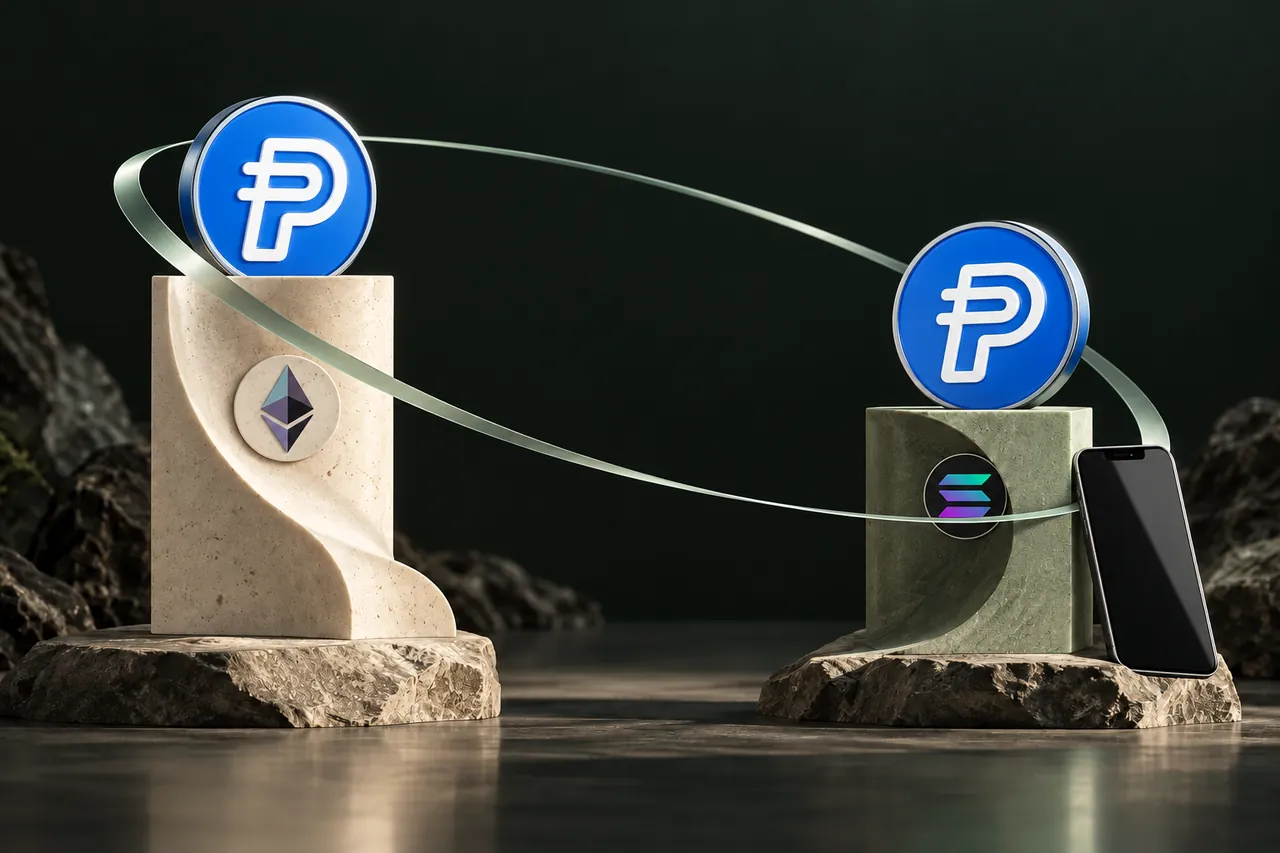
Ethereum and Solana use different token systems
Ethereum PYUSD is handled through Ethereum's token model, while Solana has its own token and account structures. Their addresses and transaction records must be checked in the context of the correct blockchain. A wallet brand supporting both networks does not turn one receiving address format into the other.
For a custodial destination, open its PYUSD deposit page and copy the complete current instructions. For self custody, confirm the wallet can display and spend the intended network's PYUSD. Do not paste a Solana address into an Ethereum recipient field or try to force validation by shortening or editing an address.
How to choose the receiving networkPYUSD is not a PayPal account credit instruction
A provider payout to a blockchain address is an on-chain transfer. It is not automatically a payment to an email address, an internal PayPal balance movement or a guarantee that every PayPal account can receive that network. Product availability and supported transfer methods can depend on the account and service.
Use the receiving product's actual crypto deposit instructions when it offers them. If it supplies no compatible PYUSD address, an ordinary wallet payout cannot manufacture that support. Keep the roles separate: Tornado Swap compares provider routes; the provider processes the deposit and payout; the destination decides how it accepts and credits the asset.
Check fees rather than assuming a free transfer
An ordinary Ethereum token send requires ETH gas. Solana transactions have SOL-denominated fees and can involve token-account handling. Some wallets or services may offer eligible sponsored transfers, but a PYUSD ticker or Solana network label is not a universal sponsorship promise.
Read the final sending wallet screen. If it offers a particular fee feature, check its conditions for that action. The provider's receive estimate and the wallet's source fee are different numbers. A custodial withdrawal may also deduct a charge, so verify the net amount delivered to the provider rather than only the amount you type.
Worked example: choosing a usable PYUSD payout
Suppose a user holds a hypothetical 0.01 BTC and wants PYUSD in a wallet that supports only the Solana version. They first obtain that wallet's compatible Solana receiving address. Selecting PYUSD Ethereum because it appears higher in a list would not fulfill the wallet's requirement.
They request BTC to PYUSD Solana, compare current provider routes and read the wallet-details summary before confirmation. The BTC deposit is paid on Bitcoin, not Solana. They save the swap ID and source transaction. The example illustrates network selection; it does not promise a quote, numerical payout or completion time for that amount.
Token features do not replace provider compatibility
A network token can have technical features that different wallets and services support to different degrees. The existence of a feature in the token standard does not prove every provider can accept every transfer form or that a particular wallet will display it correctly.
Use ordinary supported transfers according to the confirmed order. If your source wallet proposes a special mode that the provider instructions do not discuss, clarify compatibility first. Avoid assuming that a successful wallet simulation establishes an exchange's account-credit policy. A blockchain transfer can succeed while a receiving service still needs a supported token and deposit format.
Review the difference between rate typesVerify the source payment and payout separately
After order creation, the QR encodes the provider's source deposit address only. It does not contain the amount, network or additional identifier. Match the order's source chain in your paying wallet, then check the address and exact amount before signing or submitting a withdrawal.
When the provider reports a payout, inspect the record on Ethereum or Solana as selected. Compare its recipient and token with the original instructions. If an exchange has not credited a confirmed transfer, preserve the evidence and contact support. Do not change the recipient on a new order and expect that to redirect a payout already sent.
A network choice checklist for PYUSD
The table captures the questions that need answers before funding. Choose a network supported by the actual recipient and provider, then evaluate cost. The fact that a token aims to track the dollar does not remove market, issuer, service or transfer risks.
A refund address, when supplied, belongs to the original source asset and network. For BTC to PYUSD it should accept BTC, not PYUSD. Keep that role distinct from the payout. Provider requirements and possible verification vary, and a route available during one visit may be unavailable or differently priced when you return.
| Question | Check before ordering |
|---|---|
| Site option | Ethereum or Solana entry actually listed |
| Recipient | Accepts PYUSD on that exact chain |
| Sending fees | Wallet or exchange's actual charge and net amount |
| Payout proof | Correct chain, token and destination |
A FEW MORE DETAILS
Common questions
Does Tornado Swap support every PYUSD network?
No. Its current curated PYUSD options are Ethereum and Solana. Issuer deployments elsewhere do not imply a provider route here.
Are all PYUSD Solana transfers free?
No. Network fees or other wallet conditions can apply. Any fee sponsorship depends on the actual service, transaction and current eligibility.
Can I receive PYUSD using a PayPal email address?
The swap form requires a compatible blockchain address. An email address is not a substitute for an on-chain deposit destination.
Why is PYUSD Ethereum separate from PYUSD Solana?
The balances and token transfers exist on different blockchains. The provider and receiving wallet must support the exact selected network.
Prepared by Tornado Swap to explain the swap workflow. Network conditions and provider offers can change; check the current order instructions before sending funds.