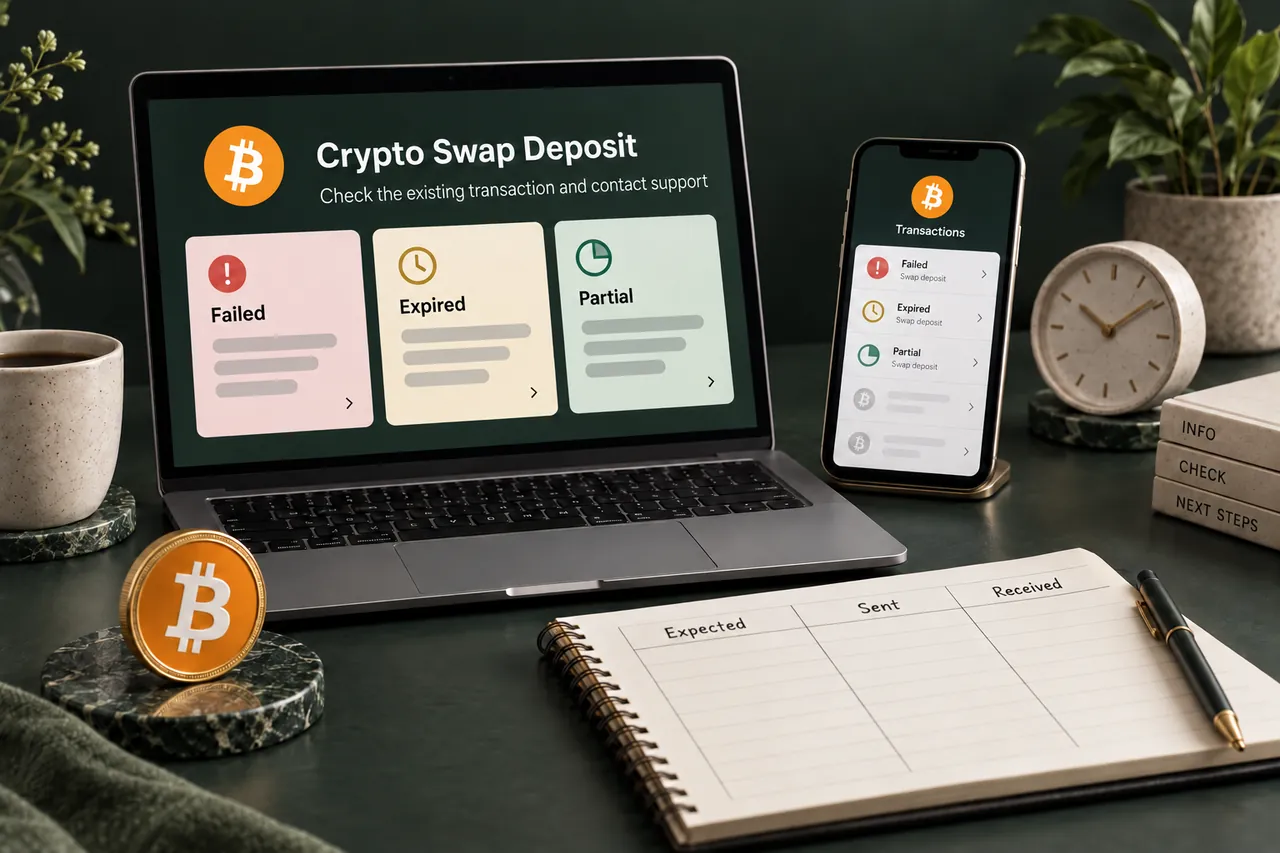
Start with two questions: was it sent, and what arrived?
A wallet error before submission can leave no blockchain payment at all. A submitted transaction can remain pending, fail during execution or succeed with an amount different from the order. A provider status is another layer that describes its handling of the payment it has recognized.
Find the actual source transaction record if one exists. Compare its chain, asset, provider address, net amount and any memo with the original instructions. Do not use a sending service's generic complete label as a substitute for those details. A withdrawal reference can help its support team while still being different from the on-chain transaction identifier.
Expired describes an order condition, not every payment outcome
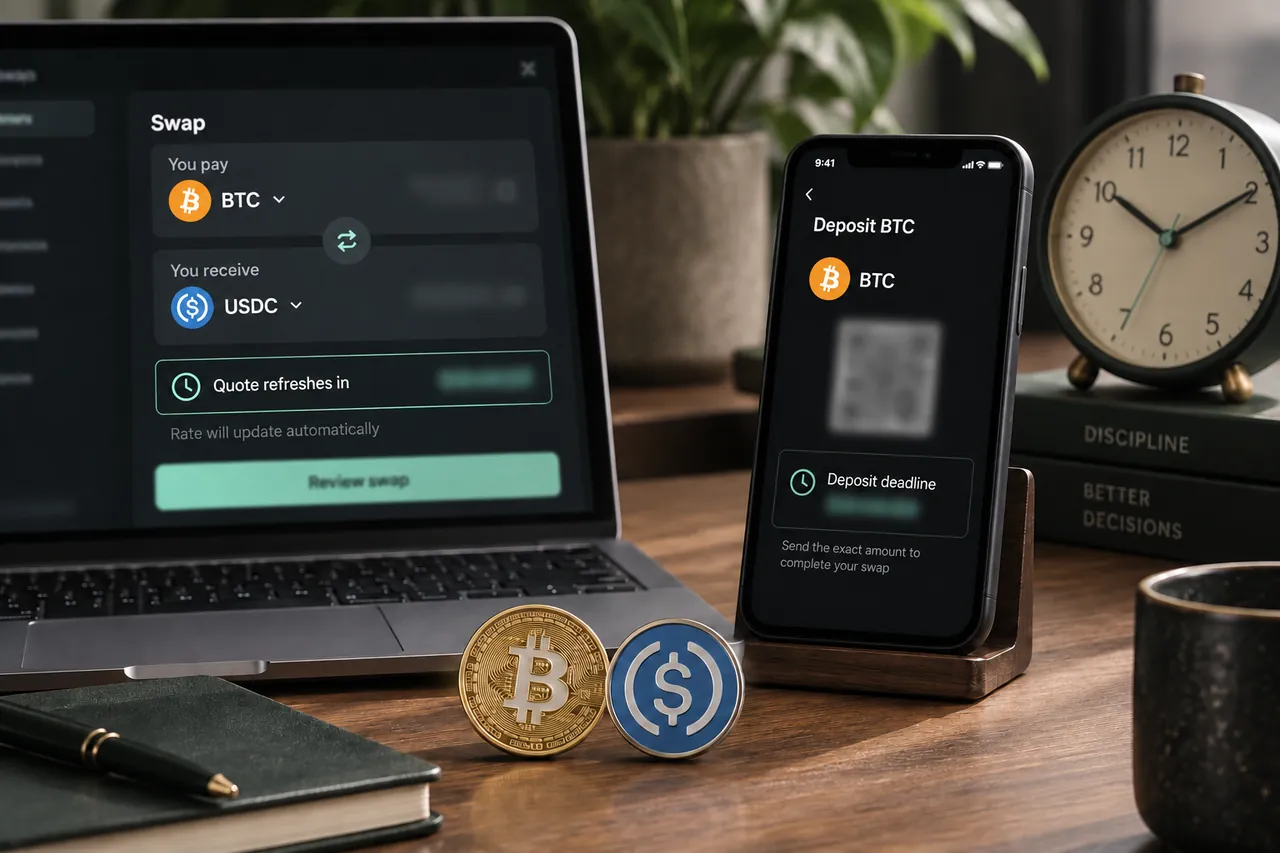
An order's deposit deadline can pass before the source transfer arrives. The interface then should not be treated as an open invitation to fund that old address under the original rate. A quote-refresh timer and the created order's deadline are separate pieces of information.
If you have not sent, request a current route and create a fresh order when ready. If you already sent, do not create another order and repeat the payment. Preserve the original swap ID and transaction and ask support about late-deposit handling. Expiration alone does not prove funds were lost, refunded or never sent.
After a confirmed depositA short deposit may come from a withdrawal deduction
A sending exchange can deduct a charge from the amount entered, or a wallet can offer a subtract-fee option. The provider may therefore receive less than the number you intended. Compare the actual payment to the deposit address, not just the total deducted from your account.
Do not automatically top up the difference. Providers can apply amount limits, deadlines and reconciliation procedures that make an extra transfer a separate complication. Explain the expected amount and net received amount to support first. An illustrative 100-unit order receiving 99 units is an amount mismatch, not evidence that another one-unit payment will necessarily complete it.
Overpayments and multiple payments also need handling
Sending more than instructed or splitting a deposit into several transfers can prevent automatic matching or change provider handling. A provider order is not a reusable account that automatically aggregates all future payments under any conditions. Follow its exact instructions for the current order.
If the payment is already split, record each source transaction with its amount and time. Do not omit a small transfer because it appears insignificant; support needs the complete funded history. Avoid making further transfers until the existing set has been reconciled. An extra amount does not guarantee a proportionally larger payout under the original quote.
A failed transaction is not the same as a failed conversion
An account-based source transaction can fail while still consuming a network fee. In that case the intended token payment may not have reached the provider. A provider can also report an order problem after a deposit was successfully received. These are different stages and need different evidence.
Read the chain transaction status and actual asset movement first. Then compare the provider's last recorded stage. If a payout exists, inspect that separate transaction too. Do not treat a single word such as failed in a screenshot as a complete diagnosis without identifying whether it belongs to the wallet, blockchain, provider order or receiving service.
Worked example: a late exchange withdrawal
Imagine an order is created for an illustrative BTC deposit, but the sending exchange queues the withdrawal. By the time the Bitcoin payment confirms, the order's displayed funding deadline has passed. The user saves the original order, withdrawal information and actual Bitcoin transaction rather than opening a replacement order and paying again.
They contact support with the timeline and ask how the late payment will be handled. The provider may need to investigate, requote or use another policy-dependent process; no automatic outcome is promised here. The point is to preserve one coherent case rather than create two orders and another payment that complicate identification.
Prepare a useful support packet
Provide the swap ID, selected provider if shown, source and destination asset/network, expected deposit amount, actual amount and source transaction hash. Include a concise timeline with timezone and any payout record. State the observed mismatch without guessing that funds vanished or that a particular team caused it.
Do not disclose a seed phrase, private key, wallet password or full account credentials. Use Contact us from the site's own interface. If the provider requests additional evidence or verification through its legitimate process, review what is needed and share it through the proper channel. An unsolicited message asking for a recovery payment is not an order status update.
Refund details help routing but do not guarantee reversal
An optional refund address, if supplied, should accept the original source asset and chain with any required memo. It is not necessarily the address that originally sent from a custodial exchange, because that withdrawal wallet may not credit incoming funds to your account.
A refund depends on provider handling, technical ability and applicable costs. A confirmed chain payment cannot simply be cancelled from the browser. The table below identifies the first useful check for each situation. Once the facts are saved and support is investigating, avoid repeatedly changing recipients, creating new orders or deleting the only local copy of the instructions.
| Observed problem | First useful check |
|---|---|
| No source hash | Was a transaction actually submitted? |
| Expired after sending | Original deadline and payment timeline |
| Short or excess amount | Net payment to provider, not total debit |
| Confirmed deposit, failed order | Provider stage and support instructions |
| Payout shown, no credit | Destination record and receiving-service policy |
A FEW MORE DETAILS
Common questions
Should I send again when an order expires?
If already funded, do not repeat the payment. Preserve the original swap ID and source transaction and ask support about that order.
Can I automatically top up a short deposit?
Do not assume that is supported. Ask how the provider will reconcile the existing payment before sending more.
Does a failed transaction mean no fee was paid?
Not always. Some failed on-chain operations consume network fees without delivering the intended token payment.
Does an optional refund address guarantee my money returns?
No. It supplies a possible destination for provider handling. Technical constraints, policies and costs determine whether and how a return can occur.
Prepared by Tornado Swap to explain the swap workflow. Network conditions and provider offers can change; check the current order instructions before sending funds.