Start with what the stablecoin represents
Different stablecoins use different issuance, reserve, collateral or other design arrangements. Their intended price reference does not make those arrangements identical. Read the issuer’s current disclosures and terms before treating a token as suitable for a particular purpose. Holding a token in a wallet is also different from having direct redemption access under an issuer program.
Do not assume every holder has the same eligibility, costs or rights to convert directly with an issuer. A provider swap is an exchange offer under its terms, not proof of issuer redemption entitlement. Keep the intended use concrete: paying a service, holding a specific network balance or funding another supported activity.
Verify the exact token version
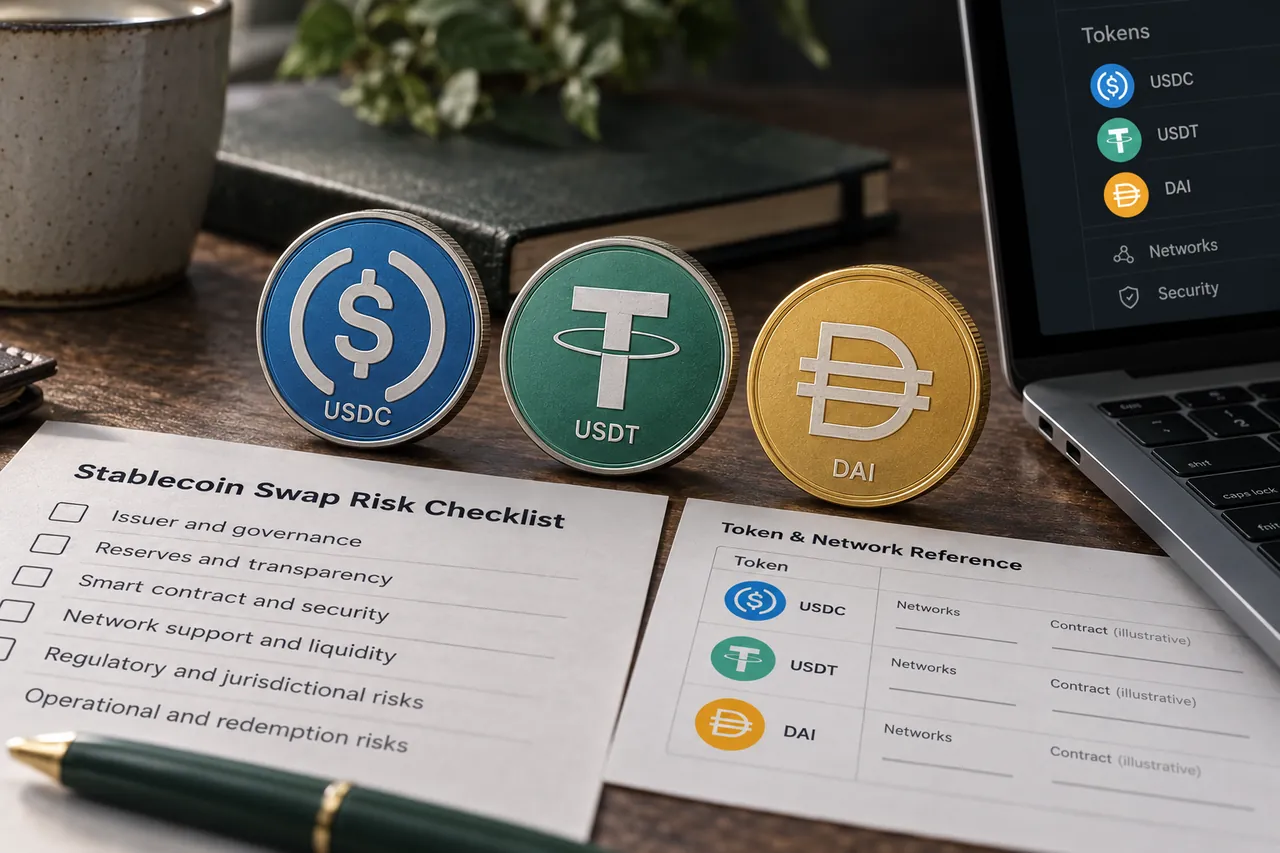
A ticker can appear on several networks and can also be used for representations that are bridged or wrapped. A receiving service may distinguish those versions. Check the supported token identification and network in the receiving instructions instead of relying on a logo or the letters USDC or USDT alone.
For a self-custody wallet, inspect the chain and token you intend to use. For a custodial destination, follow its deposit support exactly. A token can exist on a network without being accepted by your chosen exchange account. Resolve native-versus-bridged or suffix questions before ordering, especially if the destination accepts only a specific representation.
Check USDC network and version choicesCheck network operation and later usability
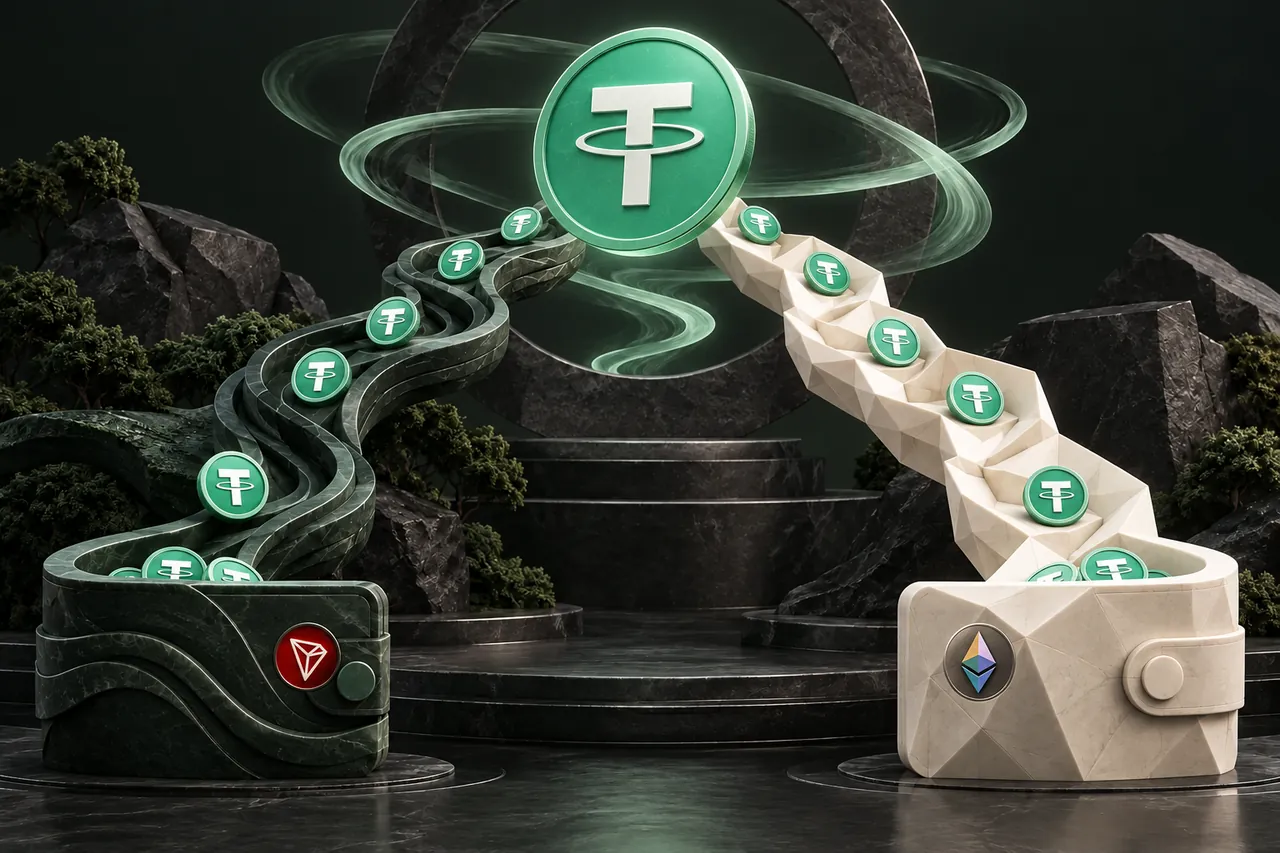
The network is part of the asset description. It determines where the payout appears and what is needed to move it later. Similar address formats across EVM networks do not make their balances interchangeable. A stablecoin on a cheaper network can be inconvenient if your next service accepts only another chain.
Inspect the destination’s current deposit availability and your wallet’s fee requirements for a later transfer. Network disruption, wallet display problems or platform maintenance can affect usability independently of the stablecoin’s reference value. Avoid planning around an old fixed fee or an assumption that every token balance can pay for its own transfer.
Compare USDT network requirementsPrice stability is different from an exchange quote
A provider offer sets the expected output under its current rate and payment conditions. Sending 1,000 units of one dollar-referenced token does not guarantee 1,000 units of another. Provider costs, market conditions and the chosen route influence the result. Compare the actual receive amount for identical inputs rather than assuming a one-for-one outcome.
Remember the separate sending cost. An exchange withdrawal can reduce the net deposit and a self-custody transfer can require a fee asset. Check what actually reaches the provider before creating the order. A mismatch between gross withdrawal and requested deposit remains an operational error even when both tokens target the same reference currency.
| Risk layer | Practical check |
|---|---|
| Issuer arrangement | Current disclosures, terms and redemption eligibility |
| Token representation | Exact version accepted by destination |
| Network | Correct chain and later transfer requirements |
| Provider | Rate, limits, verification and refund conditions |
| Receiving service | Deposit availability, minimum and crediting rules |
A hypothetical stablecoin route that is not usable
Imagine a receiving platform accepts only USDC on Ethereum, while a route comparison offers a slightly larger USDC amount on another network. The larger number does not satisfy the receiving requirement. The user chooses the compatible version and checks that the expected payout exceeds the platform’s current minimum before comparing eligible providers.
Suppose the sender is an exchange that deducts an illustrative 2 units from a gross 500-unit withdrawal. The actual deposit is 498, so the provider offer must match the deliverable amount or the withdrawal must be adjusted. These hypothetical numbers illustrate compatibility and arithmetic rather than a current rate or fee.
Read provider policies before the deposit
Stablecoin liquidity does not remove provider responsibility or checks. The selected provider temporarily handles the exchange funds, and its verification, limit, deadline and refund policies can apply. Tornado Swap does not itself custody the deposit. Evaluate the provider process even when the requested route involves familiar major tokens.
A privacy rating is a comparison signal, not a guarantee that verification never occurs. If the conditions do not fit your requirements, stop before sending. Once a transfer is made, changing the selected route in another tab does not alter the original provider order or the actual network payment.
Keep an evidence trail proportionate to the transaction
Save the swap ID, source and destination network descriptions, confirmed amount and recipient. Add the sending hash after broadcasting and the payout reference where available. At completion, inspect the correct chain and the receiving platform’s credit rather than only the provider’s paid label.
- Identify the issuer arrangement and intended use.
- Verify the destination accepts the exact token representation and chain.
- Compare a live offer for the actual deposit amount.
- Read provider timing, verification and mismatch conditions.
- Keep the order and transaction records until the destination credits the payout.
A FEW MORE DETAILS
Common questions
Does a dollar reference make a stablecoin risk-free?
No. Issuer arrangements, market conditions, network operation, token versions and service policies remain relevant. Evaluate each layer for the actual token and use.
Can I redeem any stablecoin directly for cash?
Direct redemption depends on the issuer’s current terms and eligibility. A wallet balance or provider swap quote does not establish that every holder has direct redemption access.
Why can the output be lower when both tokens target one dollar?
The provider exchange reflects its route economics and conditions. Costs and market pricing can affect output, so a shared reference is not a one-for-one quote guarantee.
Is native USDC the same as every bridged USDC token?
Do not assume equivalence for destination support. Check the exact representation and network accepted by the wallet or custodial service before creating the swap.
Prepared by Tornado Swap to explain the swap workflow. Network conditions and provider offers can change; check the current order instructions before sending funds.