What does a W address represent?
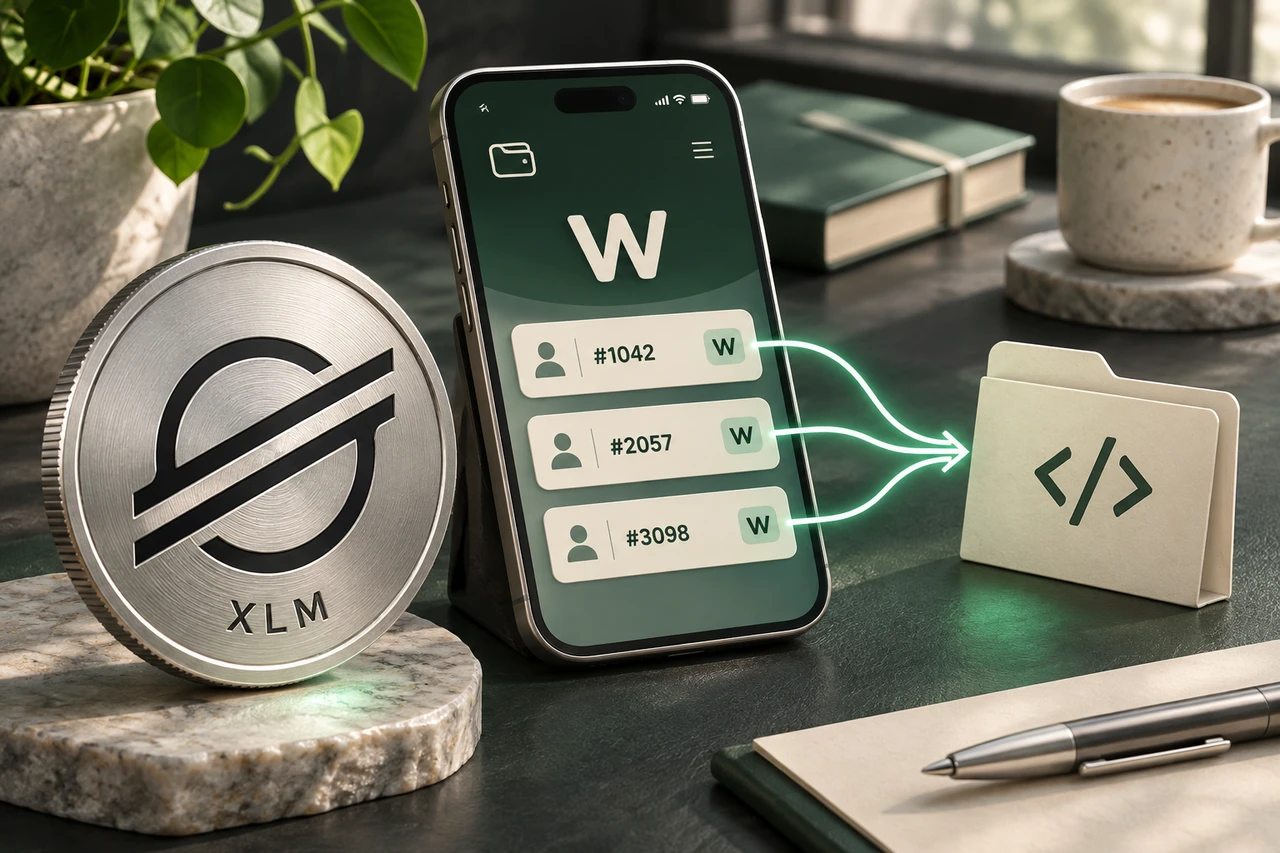
A muxed contract address combines a smart contract’s identity with a numerical identifier. The identifier lets a service distinguish between customers using the same contract. CAP-84, the implemented specification, extends an approach already used for Stellar accounts to contracts.
The identifier appears in transfer-event data. This gives the receiving application information it can use to associate a payment with an internal customer balance. Sharing an underlying contract therefore does not mean two customers should use interchangeable deposit details.
Stellar CAP-84: implemented muxed contract address specification
Why a wallet might still reject the destination
SDF tells wallet and exchange operators to update their software libraries and add the new address variant to their own validation, display and storage logic. A protocol upgrade and a particular service’s support are separate implementation steps.
For a user, an error in an address field is a reason to check compatibility before continuing. It does not tell you which part of the sending or receiving service needs an update.
- Read the receiving service’s current deposit instructions for the exact asset and network.
- Check the sending wallet’s official release notes or support page for the address type it accepts.
- If the details remain unclear, ask official support whether the two services support the intended transfer. Do not edit the address to make a form accept it.
SDF upgrade guide: activation status and operator requirements
What Bell’s security and timing changes mean
Bell also adds a way for smart contracts to verify ML-DSA signatures, a post-quantum signature scheme. SDF explains that contract accounts can adopt this functionality; network transaction signatures continue to use Ed25519. The upgrade alone does not establish that a particular wallet has adopted a new signing policy.
A separate change gives ledger timing millisecond precision. SDF describes this as groundwork for future speed improvements. It does not, by itself, make the network produce ledgers faster. Avoid treating either feature as a promise about a provider’s processing time or the protection offered by an individual product.
A FEW MORE DETAILS
Common questions
Has Bell activated, or is it still awaiting a vote?
The upgrade guide marks the November 23 mainnet vote complete and confirms Protocol 30 is live.
Does a network upgrade prove my exchange accepts a W address?
Check the exchange’s own current instructions. SDF identifies application updates that operators need to make.
Reviewed November 25, 2026 against Stellar Development Foundation documentation and the implemented CAP-84 specification. The shared-contract example is fictional. No individual wallet or swap provider’s W-address support was tested.