Keep unit counts separate from value comparisons
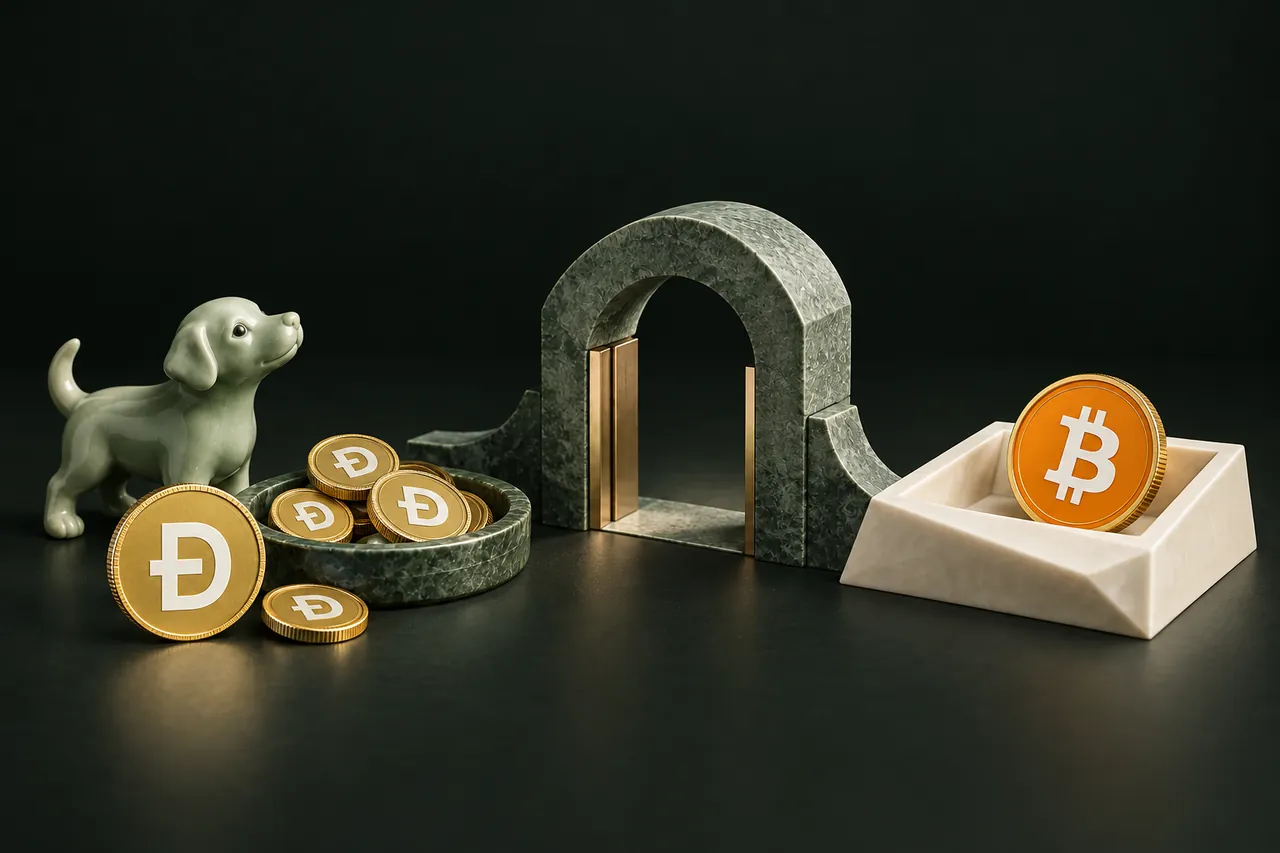
One DOGE and one BTC are different units with different market prices. A quote returning a small decimal BTC amount is not inherently a poor route, and a larger DOGE number does not establish a larger monetary value. Compare the actual input and output rather than the visual length of the numbers.
Use enough precision to inspect the Bitcoin receive amount and the destination's deposit minimum. If your goal is a specific usable balance after arrival, account for the receiving service's rules as well. Do not round a quote casually and then send a different DOGE amount to the provider; the created order supplies the required payment.
Native Dogecoin is the source named by this route
The source entry is DOGE on Dogecoin mainnet. A wrapped DOGE token or a derivative on another chain is not automatically accepted by a native Dogecoin deposit address. A wallet portfolio can aggregate these holdings, so inspect the actual balance and network you can withdraw.
If paying from an exchange, select its native Dogecoin withdrawal option and compare it with the order. Do not choose a different network because it has a lower displayed charge. The provider can convert assets only through the route it created, not by guessing what a same-name token on another chain was intended to mean.
How to choose the receiving networkChoose a Bitcoin destination the service can credit
Obtain the recipient's current BTC mainnet deposit instructions. A Bitcoin Lightning invoice, a wrapped BTC address on another chain and a BTC address are different destinations. The curated BTC mainnet entry should not be treated as support for every product containing Bitcoin in its name.
For a self-custody wallet, confirm you control the receiving account and can use the address format supplied. For an exchange, check its BTC deposit minimum and supported on-chain method. Address validation is one check; the destination's actual account-credit policy still determines whether the payout will be usable as intended.
Compare routes using the same request
Provider receive estimates are meaningful when source amount, source network, destination and rate type are consistent. A route requested minutes later or for a different amount can show another price. Do not interpret every changed estimate as a hidden fee or compare unmatched screenshots as a controlled price test.
Review the live output and provider information together. A fixed-rate route and a floating-rate route have different execution conditions, and neither label guarantees a particular market outcome beyond those terms. Availability and possible verification can vary. If a filter removes all routes, that is not permission to fund an old quote with different parameters.
Worked example: planning a DOGE payment from an exchange
Imagine a user wants to send an illustrative 1,000 DOGE from an exchange and receive BTC. The exchange shows a withdrawal charge, so the user checks whether entering 1,000 means the provider receives 1,000 or a smaller net amount. They resolve this before confirming the provider payment.
They request a quote for the amount that will actually arrive under the order instructions, verify the BTC recipient and compare estimated output. The example does not state a live DOGE/BTC rate or recommend that amount. The practical point is that a total account debit and a provider deposit are not always the same number.
Read the deposit deadline before submitting
An exchange can queue a withdrawal, so the provider's deposit deadline matters. A quote-refresh timer belongs to quotation; a created order has its own funding instructions. If the sending service cannot meet them, clarify handling before paying rather than assuming the original terms remain open indefinitely.
The QR encodes the Dogecoin deposit address only. Check the source asset, chain and amount separately after scanning. Save the swap ID using its copy icon and retain the actual Dogecoin transaction ID once available. An exchange's internal withdrawal reference can help its support team but is not necessarily the chain record.
Track Dogecoin deposit and Bitcoin payout independently
A Dogecoin confirmation proves a source-chain event. The provider still needs to match the payment and process the BTC payout under its conditions. A Bitcoin receiving wallet cannot explain a source deposit sent to the wrong address or for the wrong amount.
When a BTC payout is shown, inspect that separate transaction and recipient. An exchange may apply its own credit confirmations after the payout is on-chain. If tracking appears stuck, describe the last verified milestone to support and supply the order ID with the relevant chain records. Avoid another DOGE deposit until the first payment has been reconciled.
A conversion-focused final review
Use the table to keep the two asset roles and cost layers explicit. The directory allows a route request, while the actual provider response establishes present availability for the chosen amount. A token listed in a selector is not a promise of liquidity, a particular price or a guaranteed completion time.
If supplying a refund address, it must accept the original DOGE on Dogecoin, not the BTC receiving asset. Check any source service's deposit requirements before relying on it for a possible return. Refund handling is provider-specific, and a confirmed source payment cannot simply be cancelled by choosing Start another swap in the interface.
| Role | Required match |
|---|---|
| Source | Native DOGE on Dogecoin |
| Destination | BTC on Bitcoin mainnet |
| Amount | Net DOGE reaching the provider |
| Evidence | Separate DOGE deposit and BTC payout records |
A FEW MORE DETAILS
Common questions
Can I use wrapped DOGE to fund this source entry?
Not automatically. The order names native Dogecoin. Use only the actual supported source asset and chain.
Does BTC mainnet mean Lightning is supported?
No. A BTC destination and a Lightning invoice are different payment methods. Use the route's explicit supported destination.
Why did the BTC estimate change when I refreshed?
Market conditions, amount, timing and provider availability can change. Compare identical request parameters and read the selected rate conditions.
Should I send again if the tracker is slow?
No. First check the original Dogecoin transaction and order details, then contact support with the evidence for that payment.
Prepared by Tornado Swap to explain the swap workflow. Network conditions and provider offers can change; check the current order instructions before sending funds.